

Frequently Asked Questions
- What exactly is digital ad fraud? Digital ad fraud occurs when bots, malware, or human fraud farms interact with your online advertising. These malicious actors generate fake impressions, clicks, and form submissions, which can drain your marketing budget without providing real human prospects.
- How does ad fraud impact financial advisory firms? For firms investing in digital marketing, ad fraud can lead to wasted capital and skewed data. Furthermore, if a bot fills out a contact form with a real person’s stolen information, your team could face potential Telephone Consumer Protection Act (TCPA) compliance risks when attempting to contact that individual without their actual consent.
- Why are marketing performance metrics sometimes misleading? Fraudulent bots are designed to mimic human behavior. They can fake conversions and submit forms, which may artificially inflate your key performance indicators (KPIs). This can make a poorly performing campaign appear successful on paper while failing to deliver tangible results.
- Is it practical to build an in-house fraud detection tool? Generally, no. Developing effective ad fraud detection requires specialized developers, massive data lakes to identify global patterns, and constant updates to stay ahead of evolving AI threats. Licensing a dedicated software solution is often much more efficient and cost-effective.
- How can a business protect its lead generation efforts? Consider starting with a traffic quality audit to understand the baseline health of your current campaigns. Partnering with a certified ad fraud detection platform can help automatically filter out malicious traffic, allowing your team to focus on genuine prospects.
Protecting Your Firm’s Marketing Budget from Digital Ad Fraud
As a financial professional, you understand the importance of adapting to where your clients spend their time. Just as investors transitioned from reading the physical newspaper to checking market updates on their smartphones, financial firm lead generation has largely moved online. However, this shift to digital marketing comes with a hidden hurdle that could be silently draining your resources: digital ad fraud.
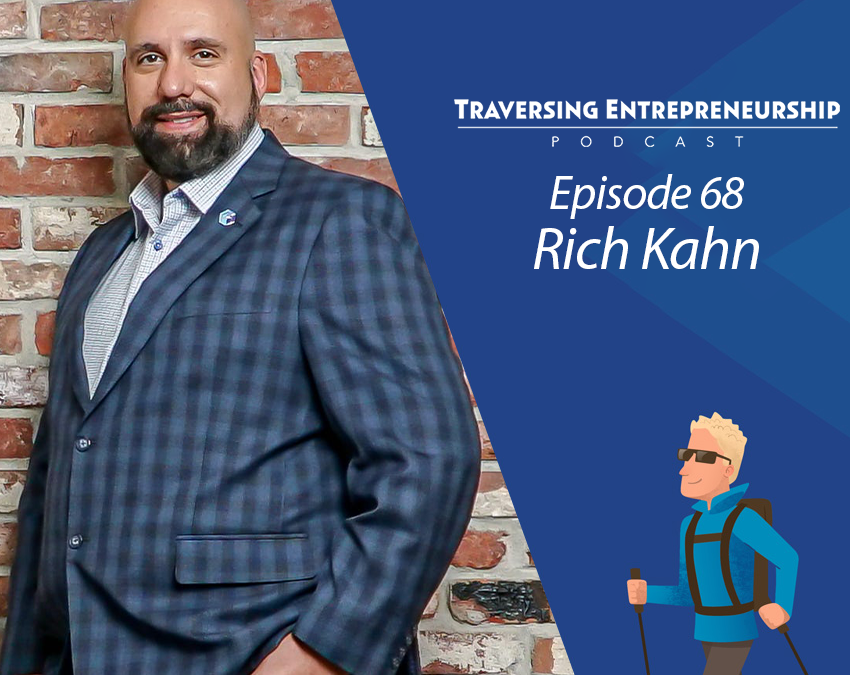
We recently explored this topic on the Traversing Entrepreneurship podcast with Rich Kahn, CEO and co-founder of Anura, a specialized software company designed to combat ad fraud. His insights offer a valuable perspective for any business owner looking to optimize their marketing efforts.
The Hidden Cost of Digital Marketing
The scale of online advertising is staggering. Global digital marketing spend recently tipped over the $700 billion mark. Yet, alongside that massive investment is an equally shocking statistic. Industry estimates suggest that well over $150 billion of that spend may be lost to fraudsters annually.
When you allocate capital toward digital marketing for financial advisors, you expect those dollars to reach genuine individuals seeking professional guidance. Unfortunately, a significant percentage of online traffic consists of bots, malware, and human fraud farms. These actors interact with your ads and deplete your budget without ever resulting in a legitimate client conversation.
Understanding the Ripple Effects of Fake Leads
Ad fraud goes beyond simply wasting money. It can actively disrupt your firm’s daily operations and introduce unnecessary compliance risks.
Imagine a scenario where a bot fills out a consultation request form on your website using a random person’s real contact information. Your team, eager to connect with a new prospect, calls that number repeatedly. The person on the other end never requested your services and is understandably frustrated by the unsolicited calls.
This situation wastes your staff’s valuable time and damages your firm’s reputation. More importantly, calling individuals who have not provided express written consent could potentially lead to serious TCPA violations. Filtering out these fake leads before they ever reach your CRM can help protect your team’s morale and your firm’s integrity.
Overcoming Misleading Metrics
One of the most frustrating aspects of digital ad fraud is how it manipulates your data. You might review a recent campaign and see excellent conversion rates, leading you to allocate even more funds to that specific marketing channel.
However, if those conversions are being generated by sophisticated AI bots, your KPIs are essentially a mirage. You might be optimizing your campaigns based on entirely fake data. Utilizing a third-party ad fraud detection solution can provide an objective analysis of your traffic. By identifying and removing the fraudulent activity, you can implement marketing ROI strategies based on reality rather than inflated metrics.
Lessons in Entrepreneurship and Adaptation
Beyond the technical aspects of fraud, Kahn’s journey highlights important business growth strategies. He initially ran a highly successful ad network for nearly two decades. When he recognized that the market was shifting and his business model was becoming outdated, he did not double down on a failing strategy. Instead, he pivoted, leveraging the internal fraud detection tool his team had built and spinning it off into a highly successful standalone SaaS company.
As business owners, we must remain flexible. What worked for your firm five years ago might not be the most efficient path forward today. Whether it is adjusting your marketing spend, upgrading your technology stack, or exploring new avenues for client acquisition, staying adaptable is a core component of long-term success.
Aligning Your Strategy
Navigating the complexities of business management, marketing, and financial planning requires patience and a clear understanding of your unique objectives. When discussing tax, legal, investment, retirement, or estate planning strategies, remember that outcomes depend heavily on individual circumstances. There is no universal strategy that is right for everyone.
Before committing significant resources to a new campaign or adjusting your firm’s operational structure, consider taking a step back to review your foundational goals.
—
Connect with Rich:
LinkedIn: linkedin.com/in/richkahn
Website: https://www.anura.io/blog/author/richard-kahn
Connect with Derek Dall’Olmo, CFP®, EA:
Email: Derek@tremontefinancial.com
LinkedIn: https://www.linkedin.com/in/derekdallolmo/
Website: https://tremontefinancial.com/about-us/
About TreMonte and Traversing Entrepreneurship Podcast
Traversing Entrepreneurship is a show for and about business owners in Traverse City, Michigan and beyond. In each episode, co-hosts Derek Dall’Olmo and Melissa Niedzielski sit down with local business owners and the professionals who serve them to talk about business building, life, money, taxes, family — and all the ups and downs that come with doing something different. Join us to hear their stories and lessons learned — and to get inspired about what might be possible in your own business.
Derek and Melissa work together at TreMonte Financial Consultants, LLC and TreMonte TreMonte Tax Solutions, LLC (together referred to as “TreMonte”). TreMonte works with business owners and entrepreneurs to develop a proactive tax strategy that maximizes after-tax profits. It is TreMonte’s goal to bridge the gap between Financial Advisors and Accountants by serving as CFO to their clients.
This show is for informational purposes only and should not be viewed as personalized financial, investment, tax, or legal advice. You should always consult an attorney or tax professional regarding your specific legal or tax situation.
Please email Derek Dall’Olmo at derek@tremontefinancial.com with questions and comments or to schedule a one-on-one conversation.
TreMonte Facebook Page | Follow Derek on LinkedIn | Follow Melissa on LinkedIn
Subscribe:
Apple Podcast | Google Podcasts | Amazon Podcasts | Stitcher | Spotify | Deezer | TuneIn
If you enjoy the show, please leave a review on iTunes to help others discover the podcast.